
Heart Health
Comprehensive nutritional support for cardiovascular function, healthy circulation, and vascular integrity.
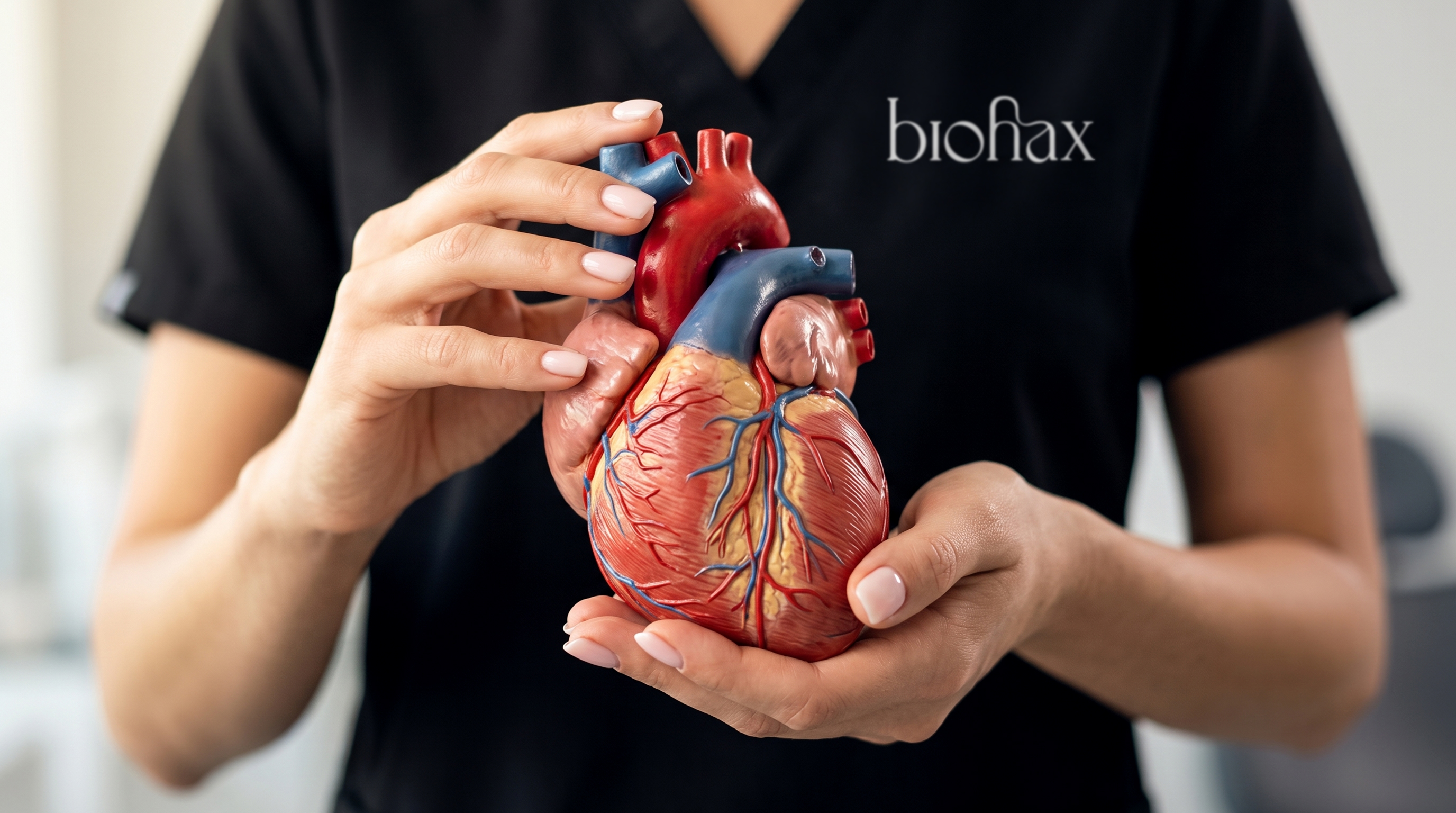
What this formula supports
The Science Behind It
Cardiovascular health is not a single variable — it is the result of dozens of interdependent biological systems operating in balance: cardiac muscle efficiency, vascular smooth muscle tone, endothelial integrity, inflammatory signaling in arterial tissue, and lipid oxidation.
This formula was built to address cardiovascular wellness comprehensively, not reductively. Each ingredient was chosen for its specific, documented role in one of these systems.
Together they form a nutritional foundation for long-term heart and circulatory health.
Full ingredient profile
Ingredient Deep Dive
What it is. CoQ10 is essential for mitochondrial energy production and is found in highest concentrations in the heart — the most metabolically active organ in the body, beating over 100,000 times per day.
What it does. CoQ10 shuttles electrons in the mitochondrial respiratory chain, enabling ATP synthesis. The heart's enormous energy demands make it particularly dependent on CoQ10 availability. CoQ10 also acts as a powerful antioxidant in cardiac cell membranes.
Why we include it. CoQ10 directly supports the heart's energy production capacity — ensuring cardiac muscle has the ATP needed for continuous, efficient contraction.
What it is. L-Arginine is the primary substrate for nitric oxide synthase (NOS) — the enzyme that produces nitric oxide, the body's main vasodilator.
What it does. Nitric oxide signals the smooth muscle in artery walls to relax, widening blood vessels and improving blood flow. This supports healthy blood pressure, endothelial function, and peripheral circulation.
Why we include it. L-Arginine is the upstream precursor to nitric oxide — supporting vascular tone and endothelial health at the biochemical level.
What it is. Bergamot contains unique polyphenols that support cardiovascular health through effects on lipid metabolism and vascular function.
What it does. Bergamot polyphenols support healthy cholesterol levels, reduce LDL oxidation, and have been shown to support endothelial function. The cardiovascular benefits are well-documented in clinical research.
Why we include it. Bergamot addresses the lipid and vascular dimensions of cardiovascular health — complementing the cardiac energy and nitric oxide support from other ingredients.
What it is. Betaine is a methyl donor involved in homocysteine metabolism. Elevated homocysteine is an independent risk factor for cardiovascular concerns.
What it does. Betaine donates methyl groups for the remethylation of homocysteine to methionine — helping maintain healthy homocysteine levels. It also supports healthy inflammatory markers and vascular function.
Why we include it. Betaine supports healthy homocysteine metabolism — addressing a key cardiovascular biomarker that is often overlooked.
What it is. Folate is essential for homocysteine metabolism. The methylfolate form is the active, bioavailable form that works regardless of MTHFR genetic variants.
What it does. Folate is required for the remethylation of homocysteine — working synergistically with betaine and B12 to maintain healthy homocysteine levels.
Why we include it. Methylfolate ensures adequate folate availability for homocysteine metabolism — addressing a common genetic bottleneck that can elevate cardiovascular risk.
What it is. Vitamin B12 is a cofactor for methionine synthase — the enzyme that converts homocysteine back to methionine. Methylcobalamin is the active, coenzyme form.
What it does. B12 works with folate to support healthy homocysteine metabolism. Deficiency leads to elevated homocysteine regardless of folate status.
Why we include it. B12 completes the homocysteine metabolism triad with folate and betaine — ensuring this cardiovascular-relevant pathway functions optimally.
What it is. Vitamin B6 is a cofactor for cystathionine beta-synthase — the enzyme that converts homocysteine to cysteine through the transsulfuration pathway.
What it does. B6 provides an alternative route for homocysteine clearance — converting it to cysteine rather than recycling it to methionine. This pathway becomes important when remethylation capacity is saturated.
Why we include it. B6 provides a second pathway for homocysteine clearance — ensuring homocysteine can be processed even when the remethylation pathway is at capacity.
What it is. Oleuropein is the primary bioactive polyphenol in olive leaves — the compound most associated with the cardiovascular benefits of the Mediterranean diet.
What it does. Oleuropein supports healthy blood pressure, protects LDL from oxidation, and supports endothelial function. Its cardiovascular benefits have been demonstrated in numerous clinical studies.
Why we include it. Oleuropein brings Mediterranean diet cardiovascular benefits in concentrated form — supporting multiple dimensions of heart and vascular health.
What it is. Taurine is the most abundant free amino acid in the heart. It is not incorporated into proteins but serves critical functions in cardiac cell physiology.
What it does. Taurine regulates calcium handling in cardiac muscle cells, supports healthy heart rhythm, and has osmoregulatory and antioxidant functions. The heart maintains taurine concentrations 200-400 times higher than plasma levels.
Why we include it. Taurine supports the electrophysiology and calcium dynamics of cardiac muscle — addressing heart function at the cellular level.
What it is. DHA is a structural omega-3 fatty acid that incorporates into cardiac cell membranes, supporting membrane fluidity and ion channel function.
What it does. DHA supports healthy heart rhythm by modulating ion channel function in cardiac cells. It also supports healthy triglyceride levels and has anti-inflammatory effects in vascular tissue.
Why we include it. DHA supports cardiac cell membrane function — ensuring the ion channels that regulate heart rhythm operate in an optimal lipid environment.
What it is. EPA is an omega-3 fatty acid with the strongest evidence for cardiovascular benefits — particularly for triglyceride reduction and vascular inflammation.
What it does. EPA reduces triglycerides, supports healthy inflammatory balance in arterial walls, reduces platelet aggregation, and supports endothelial function. High-dose EPA has demonstrated cardiovascular benefits in major clinical trials.
Why we include it. EPA provides the most clinically validated omega-3 support for cardiovascular health — addressing triglycerides, inflammation, and vascular function.
Formulator Note
Cautions
- Caution: Consult a healthcare professional if taking cholesterol-lowering medications.
- Caution: Consult a healthcare professional if you have kidney disease.
- Caution: Consult a healthcare professional if taking blood pressure or anticoagulant medications.
- Caution: Consult a healthcare professional if you have cardiovascular disease or herpes simplex virus.
- Caution: May lower blood pressure or blood sugar. Consult a healthcare professional if taking antihypertensive or antidiabetic medications.
- Caution: Consult a healthcare professional if taking blood thinners.
Start your 28-day cycle
One personalized pod per day. Adjust or cancel anytime.
Contains Dairy, Soy, and Sulphites.
*These statements have not been evaluated by the Food and Drug Administration. This product is not intended to diagnose, treat, cure, or prevent any disease.